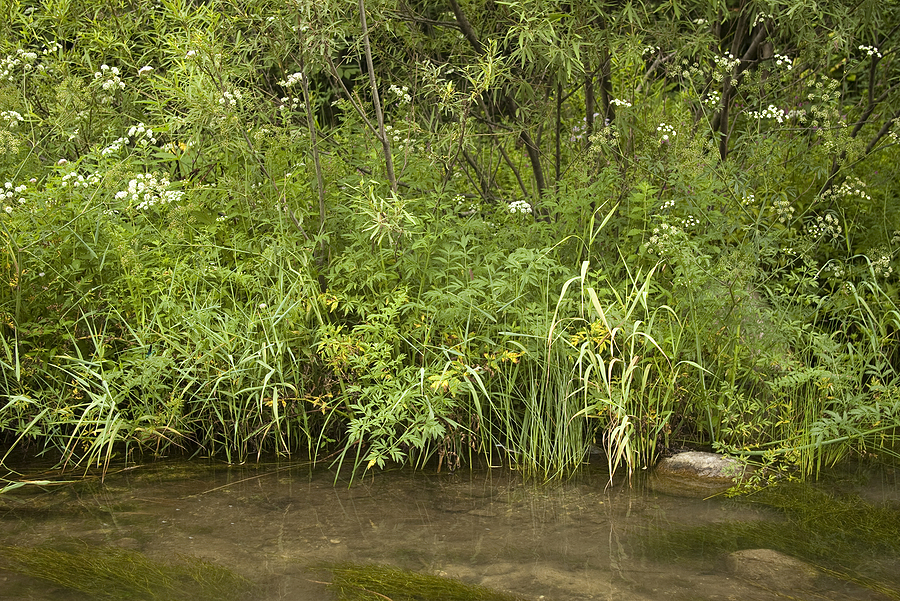
Overgrowth along a creek bank or property edge can quickly turn a clean piece of land into a tangled mess. Thick brush can block access, hide the ground, and make it harder to see what is happening near the water.
Clearing the area can help. However, removing every plant is not always a good idea. Some vegetation can help hold soil in place along a creek bank. The best approach is to remove unwanted brush while keeping the bank stable.
Why Can Creek Bank Overgrowth Cause Problems?
Dense brush can make it harder to use and maintain the land around a creek. Small trees, vines, weeds, and other growth can take over areas that were once easy to access.
Heavy growth can block views of the creek and make routine property work harder. It can also create ideal hiding places for snakes, rodents, mosquitoes, and other pests.
Erosion is another concern. When soil near the water loses plant cover or gets disturbed, rain and moving water can carry it away. Over time, this can weaken or unevenly shape the creek bank.
How Can You Clear Brush Without Damaging the Creek Bank?
The goal should be controlled clearing, not stripping the bank of all fauna. Cutting unwanted brush while leaving useful root systems in place can help keep the soil together.
Heavy equipment can also cause problems if it disturbs the bank. A machine that tears out roots or pushes soil toward the creek may leave the area more open but unstable.
A brush clearing company can assess the area before work begins and determine what should stay and what should go. This is especially helpful when the bank is steep, soft, or already showing signs of erosion.
Should You Preserve Some Vegetation Along a Creek Bank?
Not every plant near a creek is a problem. Deep-rooted native plants and grasses can help hold soil in place. Vegetation between the water and the rest of the property can also provide a buffer.
However, you don’t have to leave all the overgrowth. Selective clearing can open paths, improve visibility, and remove unwanted brush while keeping useful plants.
The right balance depends on the slope, soil, water flow, and the bank’s condition.
How Does Creek Bank Erosion Start?
Creek banks can erode when moving water removes soil faster than plants and roots can hold it. Heavy rain and flooding can increase erosion and worsen the problem.
The outside bends of creeks can face more water pressure. Water may also cut into the bottom of a bank, creating an undercut area that can eventually collapse.
Bare soil is another concern. Removing all vegetation from a bank can leave the ground exposed to rain and runoff.
If you see exposed roots, leaning trees, missing soil, or sections of bank falling toward the creek, the area may need more than simple brush removal.
What Is the Best Way to Stabilize a Bare or Eroding Bank?
A badly eroded bank may need grading, rock, or new vegetation. A gentler slope can reduce the force on the soil. Properly placed rock can help protect areas that receive strong water flow.
Plants can also help hold soil above the protected edge. The right fix depends on the bank’s condition and how water moves through the property.
Brush clearing should come before major work when thick growth prevents you from seeing the soil’s actual condition. Once the area is open, it becomes easier to see where erosion is occurring.
What Should You Avoid When Clearing Creek Bank Overgrowth?
Removing everything may seem like the fastest way to get a clean creek bank, but it can create new problems. Uprooting plants can disturb soil and remove roots that help hold the bank together.
Avoid leaving large amounts of cut brush in the creek. Herbicides can pose problems near water, and loose material can move during heavy rain.
If the property has a steep bank or active erosion, plan clearing around soil and water conditions.
When Is Forestry Mulching a Good Choice for Creek or Property Edges?
Forestry mulching can be useful when a property edge has become crowded with brush, small trees, vines, and other unwanted growth. The equipment cuts and processes vegetation in place, leaving a layer of organic material over the cleared ground.
For property edges, this can open access and improve visibility without hauling away every piece of brush.
Creek banks require more care. The work should avoid disturbing areas that need vegetation to support the soil. A qualified brush clearing crew can determine where mulching makes sense and where vegetation should remain.
When Should You Get Professional Help?
A creek bank can look like a simple brush-clearing job until you see unstable soil, exposed roots, or water cutting into the bank.
Jay’s Brush Clearing can help property owners deal with thick brush and overgrowth along property edges. The right clearing plan can make the area easier to access and maintain while accounting for the condition of the creek bank.
If brush has taken over the edge of your property, clearing it can be a good first step toward getting the area back under control. The key is knowing what to remove and what should stay.
If you’re ready to start, call us today at (207) 501-3510 or request a free estimate online to learn more and start your overgrowth clearing project. Bottom of Form
 LICENSED & INSURED